- Project by Pico Lütjens
Description
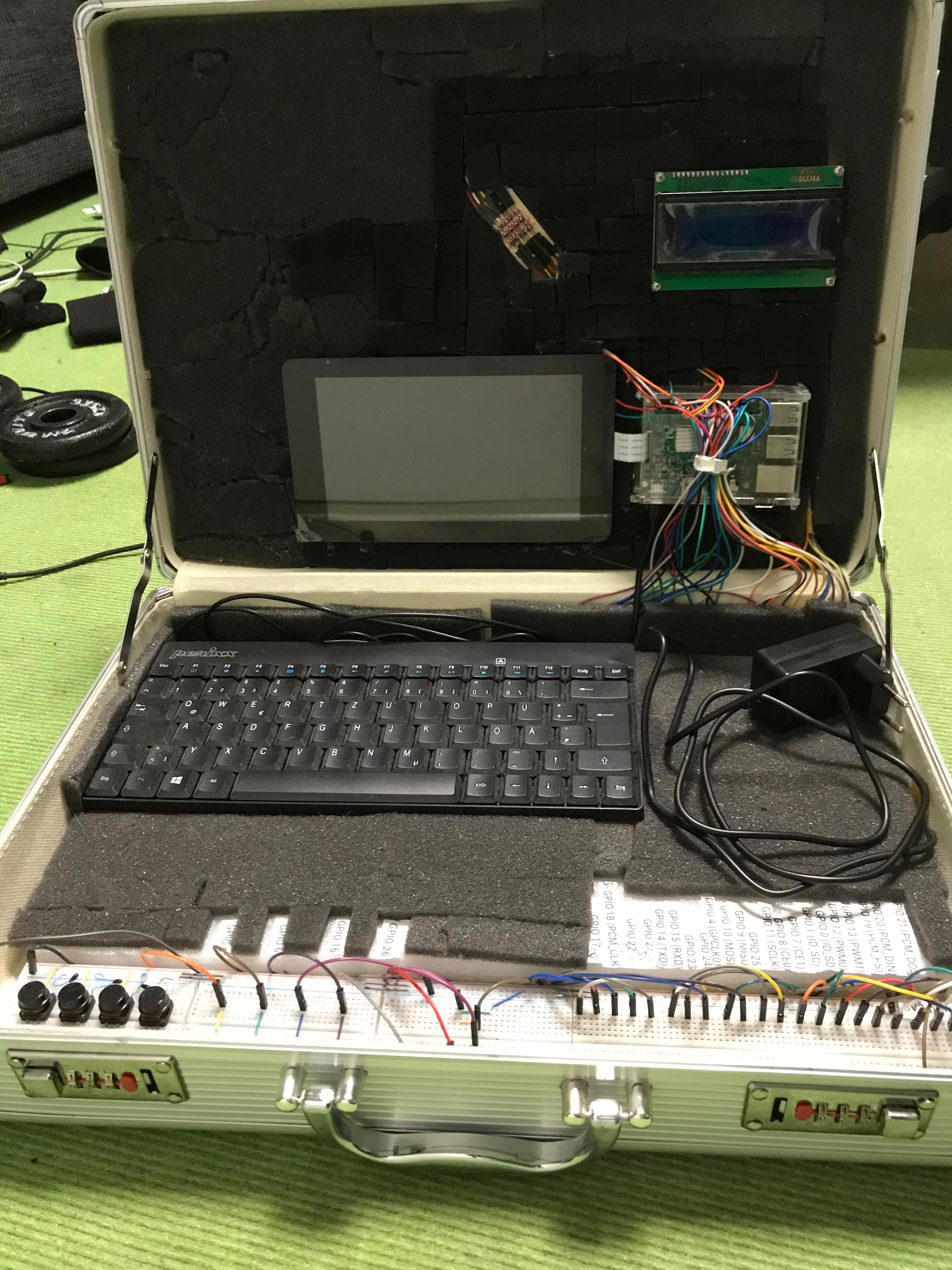
suitpidev is a project i wanted to do for a long time. A few months ago i did a lot of development with Arduinos and Raspberry Pis. I always had many electronic parts laying around because of testing purposes and was never really able to organize them in one place. Also i had the Arduinos and Raspberry Pis laying around with open electrical contacts which i think should not be the case if you are developing and you are at least a bit organized. So i came up with the idea to use a case to keep all electronic parts in one place and i quite liked the idea to not have your computing part losely laying in there. So i developed a suitcase that integrates a Raspberry Pi by itself.
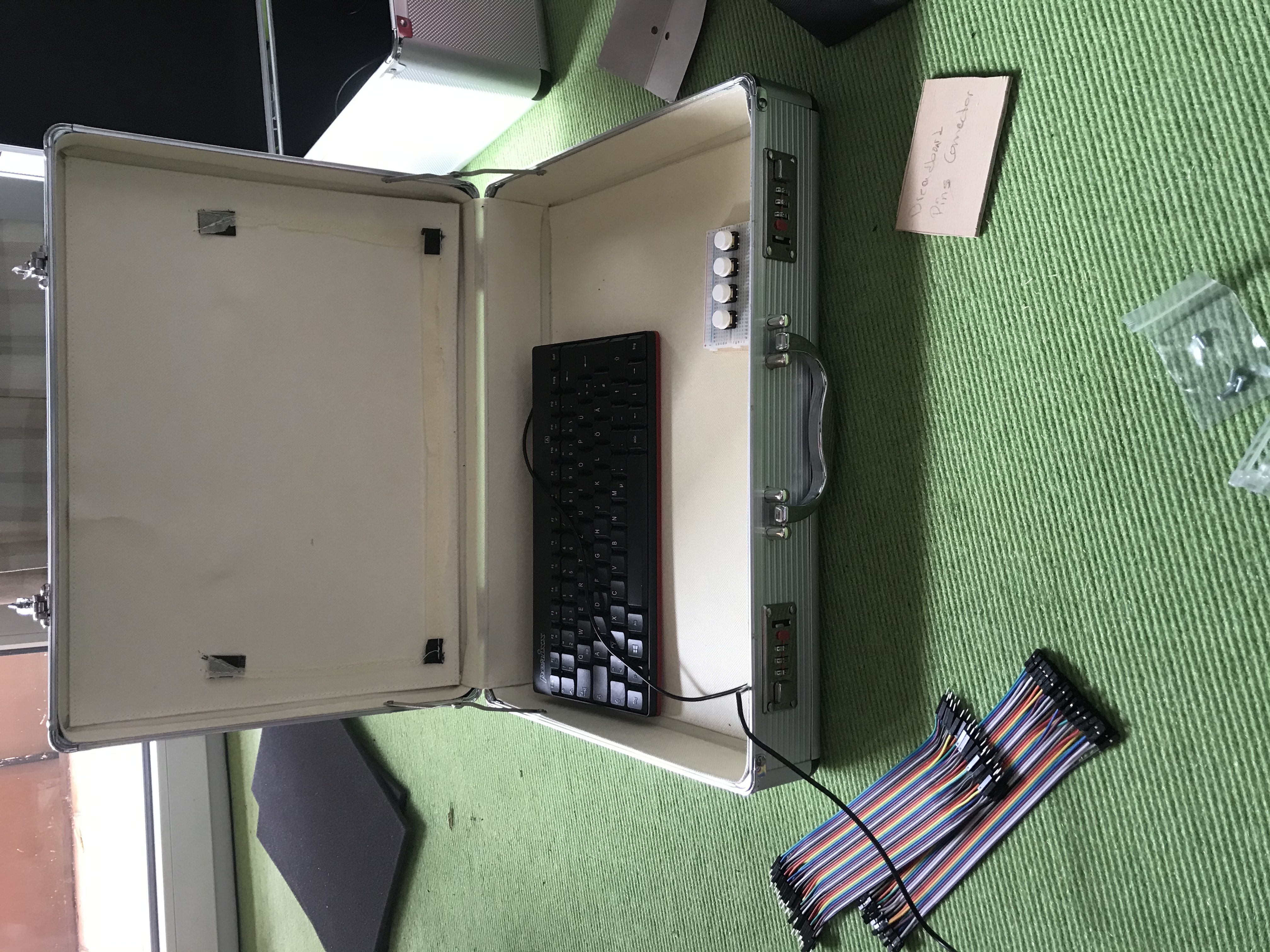
I knew that the pin ports would need a lot of space so i decided not to use a mouse at all and instead to use a Touchscreen. I used a standard Touchscreen which is common with Raspberry Pis and is easy to connect. I decided to make the Raspberry Pi and the Touchscreen sit in the top part of the suitcase and the pin ports connectors to sit in the bottom part of the suitcase. For the redirection of the ports i used the standard cables that are used with Raspberry Pis and Arduinos. I also added a LCD-Display that i had laying around to display some variables if needed.
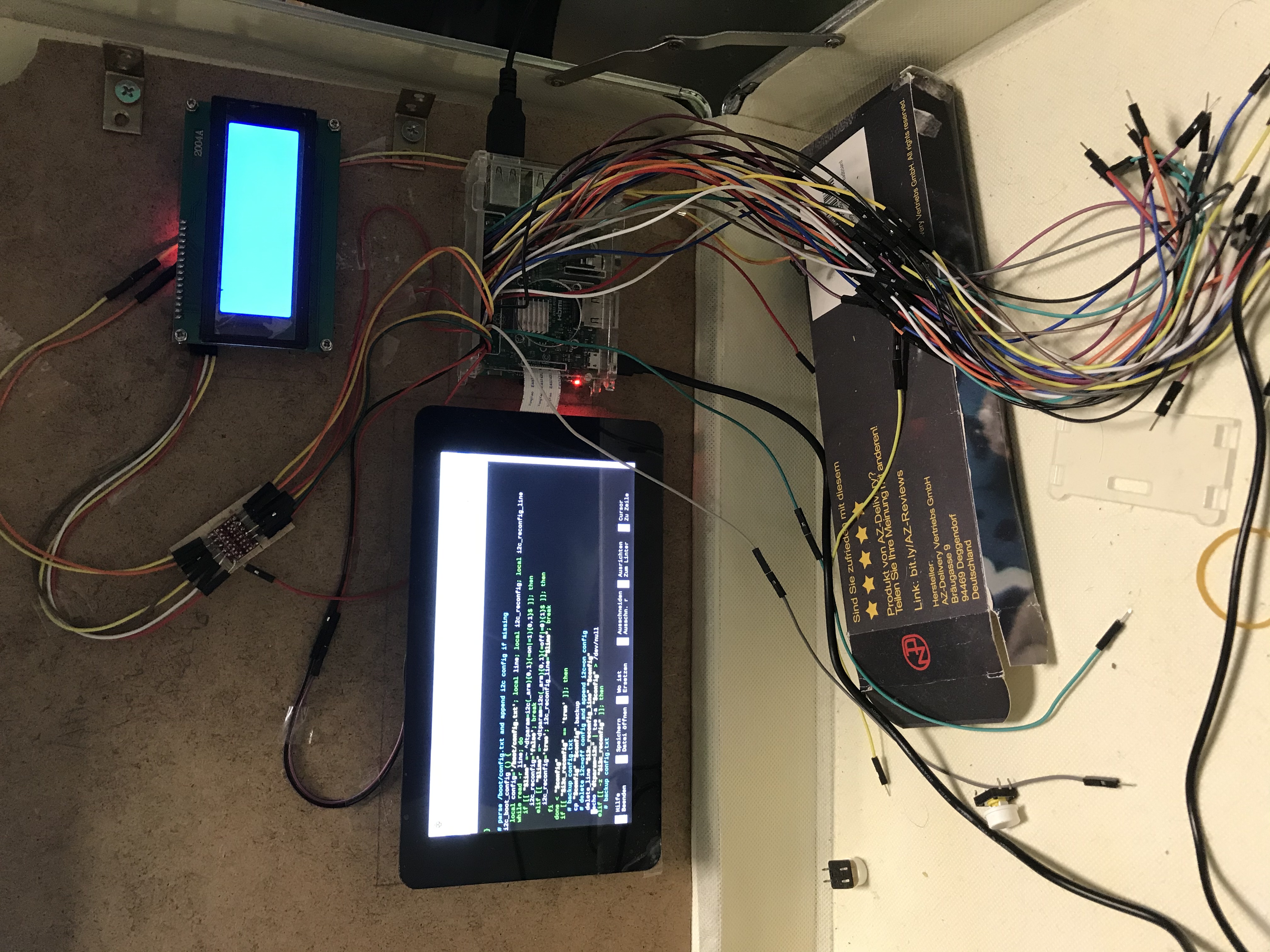
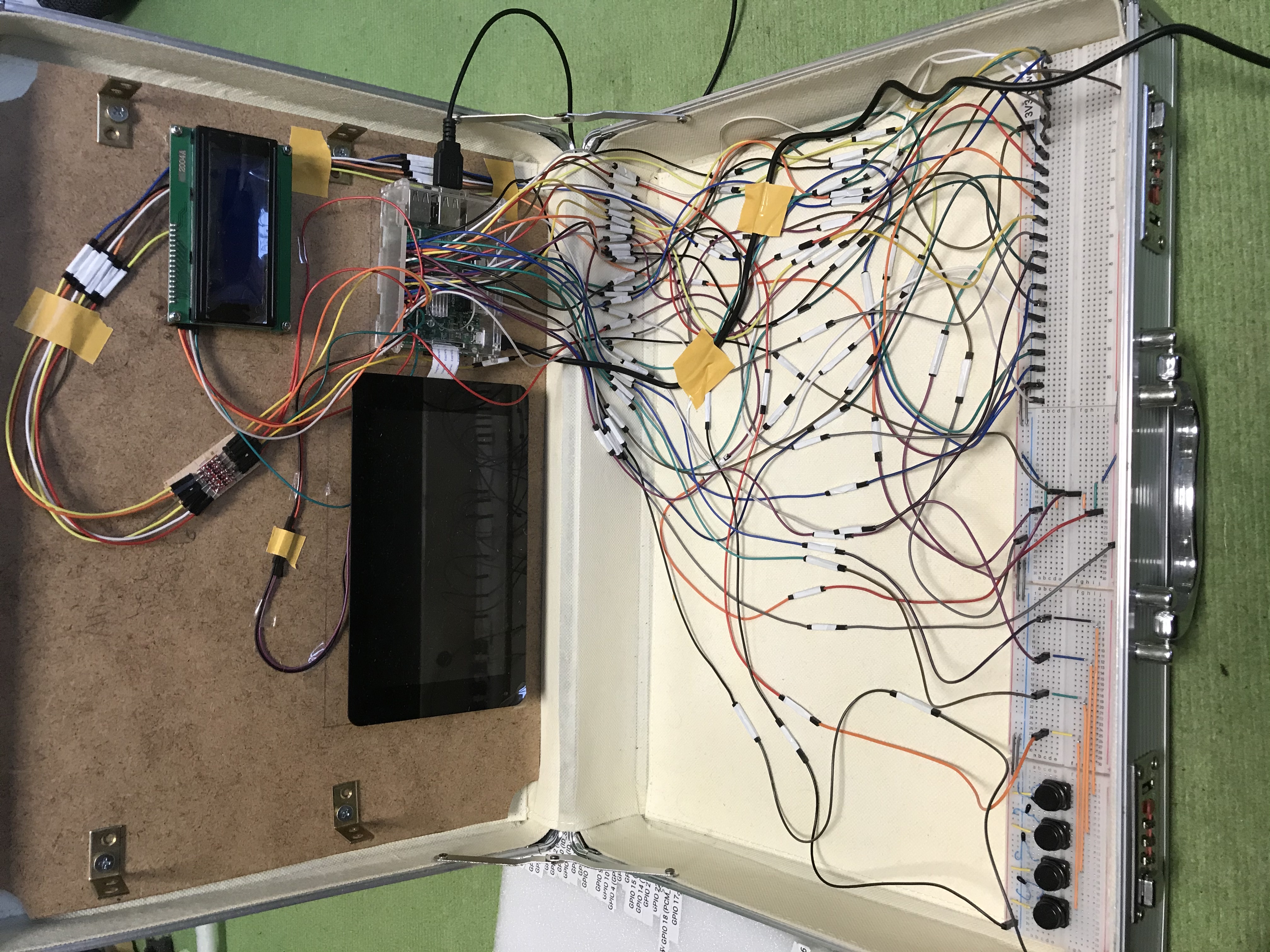
I connected four Buttons by default that can be used. Apart from that on the right panel Modules and Sensors can be connected. Here i included a Voltage Transformer which separates the right panel into a 3.3 Volt part and a 5 Volt part. This is useful because Raspberry Pi operates at 3.3 Volt and most Arduinos operate at 5 Volt and so do Modules that are desinged to use with them. However since they have the same pins you can mix them, but you have to keep track of the operating Voltage, otherwise you will most likely damage your Modules. This way both type of Modules are supported. After that i added Labels for all the GPIO pins and a Keyboard which is the standard Raspberry Pi Keyboard.
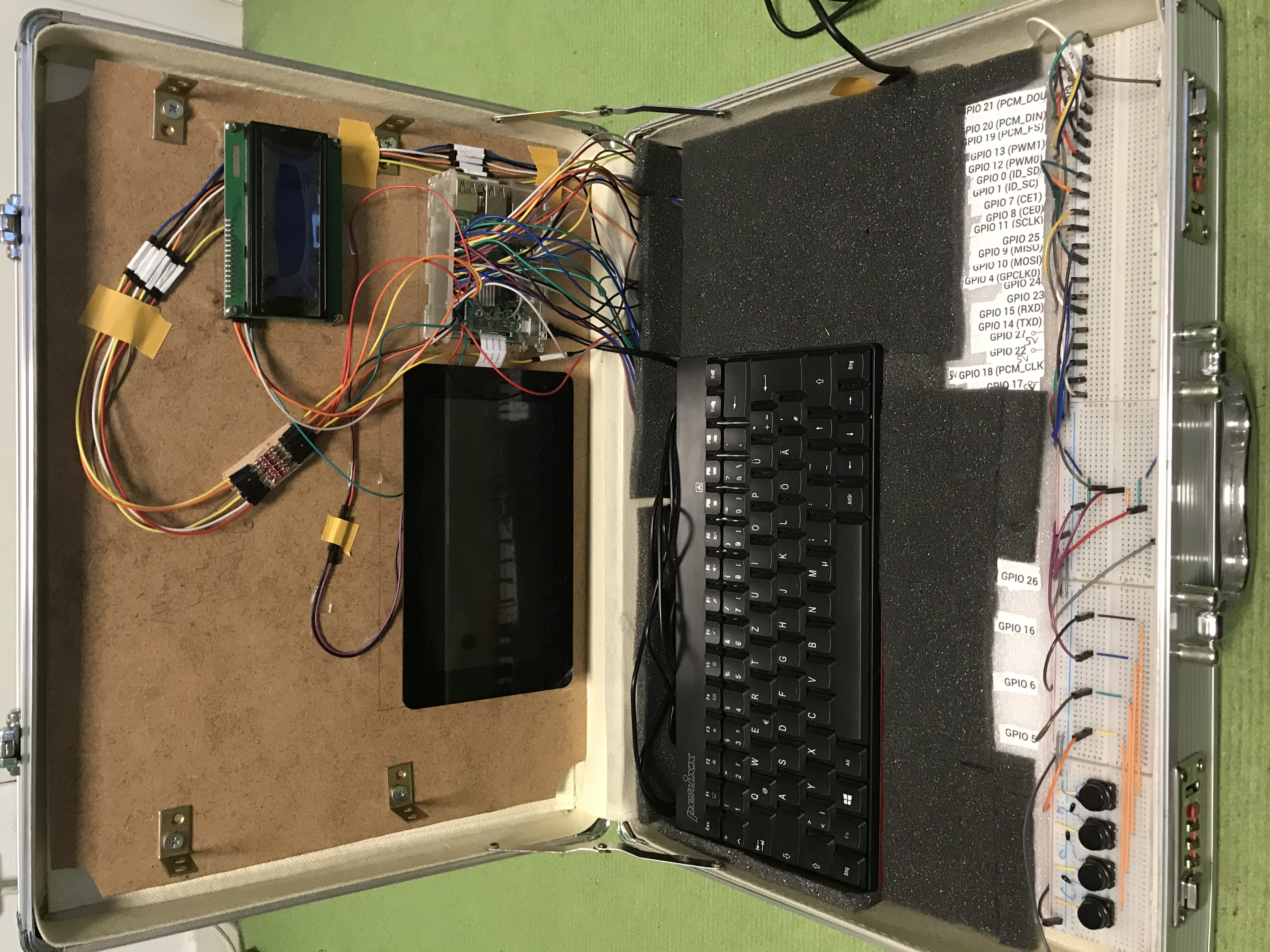
Than i did the background of the top part for which i just used some rest materials i had left - its purpose was not to look stylish just to function. After placing the Power cable there was still enough space left. Now this Suitcase can be used to develop a Raspberry Pi Project and the Sensors and Modules used could just be left in the Suitcase while you can work with it from anywhere where you have access to electricity.